Best Programming Language to Learn in 2026
Why Choosing the Right Language Matters
With hundreds of programming languages available, choosing the right one to learn can feel overwhelming, especially for beginners. The truth is, the “best” programming language depends on your goals — what you want to build, where you want to work, and what kind of problems you want to solve. In this guide, we’ll analyze the top programming languages of 2026, their use cases, and help you make an informed decision.
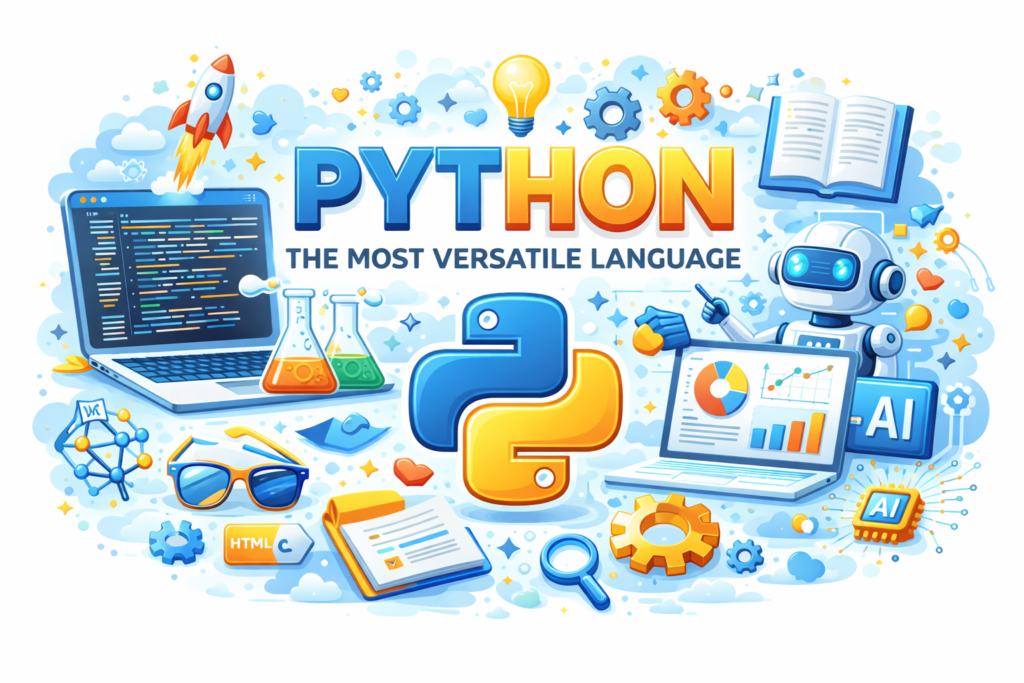
Python is a language that can do many types of work easily.
Python continues to reign as the most popular and beginner-friendly programming language in 2026. Its simple, readable syntax makes it the perfect first language, and its versatility means you can use it for almost anything.
What You Can Build with Python
- Web Applications: Using frameworks like Django and Flask
- Data Science & Analytics: Libraries like Pandas, NumPy, and Matplotlib
- Machine Learning & AI: TensorFlow, PyTorch, scikit-learn
- Automation & Scripting: Automate repetitive tasks
- Backend APIs: FastAPI, Flask REST
Python’s job market is enormous — from startups to tech giants like Google, Netflix, and Instagram, Python developers are in high demand. Average salary in India ranges from ₹5-25 LPA depending on experience and specialization.
2. JavaScript — The Language of the Web
JavaScript is the backbone of the internet. Every website you visit uses JavaScript for interactivity, and with Node.js, it’s now used for server-side development too. In 2026, JavaScript remains essential for anyone interested in web development.
What You Can Build with JavaScript
- Frontend Web Apps: React, Vue.js, Angular
- Backend Servers: Node.js, Express.js
- Mobile Apps: React Native
- Desktop Apps: Electron
- Full-Stack Applications: MERN/MEAN stack
JavaScript’s ecosystem is the largest of any programming language, with millions of packages available through npm. It’s the language that gives you the most job opportunities globally, with average salaries of ₹6-30 LPA in India.
3. TypeScript — JavaScript's Better Self
TypeScript is a superset of JavaScript that adds static typing. In 2026, TypeScript has become the standard for large-scale JavaScript projects. Companies like Microsoft, Google, Airbnb, and Slack use TypeScript extensively. If you learn JavaScript, adding TypeScript to your skillset is a natural and highly valuable next step.
4. Java — The Enterprise Workhorse
Java has been a dominant language for over 25 years and continues to power enterprise applications, Android development, and large-scale systems. While it’s more verbose than Python or JavaScript, its robustness, performance, and vast ecosystem make it a top choice for backend development and enterprise applications.
What You Can Build with Java
Enterprise Applications
Spring Boot framework
Android Apps
Native Android development
Big Data
Hadoop, Spark
Cloud Services
Microservices architecture
Financial Systems
Banking and trading platforms
5. Go (Golang) — The Cloud-Native Language
Created by Google, Go has become the go-to language for cloud infrastructure, microservices, and DevOps tools. Docker, Kubernetes, and Terraform are all written in Go. Its simplicity, speed, and excellent concurrency support make it ideal for building scalable backend systems. Go developers command premium salaries, with averages of ₹10-35 LPA in India.
6. Rust — The Performance King
Rust has been voted the “most loved programming language” for years, and for good reason. It offers C/C++ level performance with memory safety guarantees. In 2026, Rust is increasingly used in systems programming, WebAssembly, blockchain, and performance-critical applications. While it has a steeper learning curve, Rust developers are among the highest-paid in the industry.
7. Swift — For Apple Ecosystem
If you want to build iOS apps, macOS applications, or anything for the Apple ecosystem, Swift is your language. It’s modern, safe, and fast. With Apple’s continued growth in India and globally, Swift developers have strong career prospects. SwiftUI has made building beautiful Apple apps easier than ever.
8. Kotlin — Modern Android Development
Google has officially declared Kotlin as the preferred language for Android development. It’s more concise and safer than Java, with full interoperability. If mobile app development interests you, Kotlin is an excellent choice. Combined with Jetpack Compose for UI, Kotlin offers a modern Android development experience.
Which Language Should YOU Learn?
Here’s our recommendation based on your goals:
- Complete Beginner: Start with Python — it’s the easiest to learn and most versatile.
- Web Development: Learn JavaScript/TypeScript — it’s essential for the web.
- Mobile Apps: Kotlin (Android) or Swift (iOS), or React Native (cross-platform).
- Data Science/AI: Python — it has the best ecosystem for ML/AI.
- Enterprise/Corporate Jobs: Java — it dominates enterprise IT in India.
- Cloud/DevOps: Go — it’s the cloud-native standard.
- High Performance: Rust — for systems programming and performance-critical apps.
Conclusion
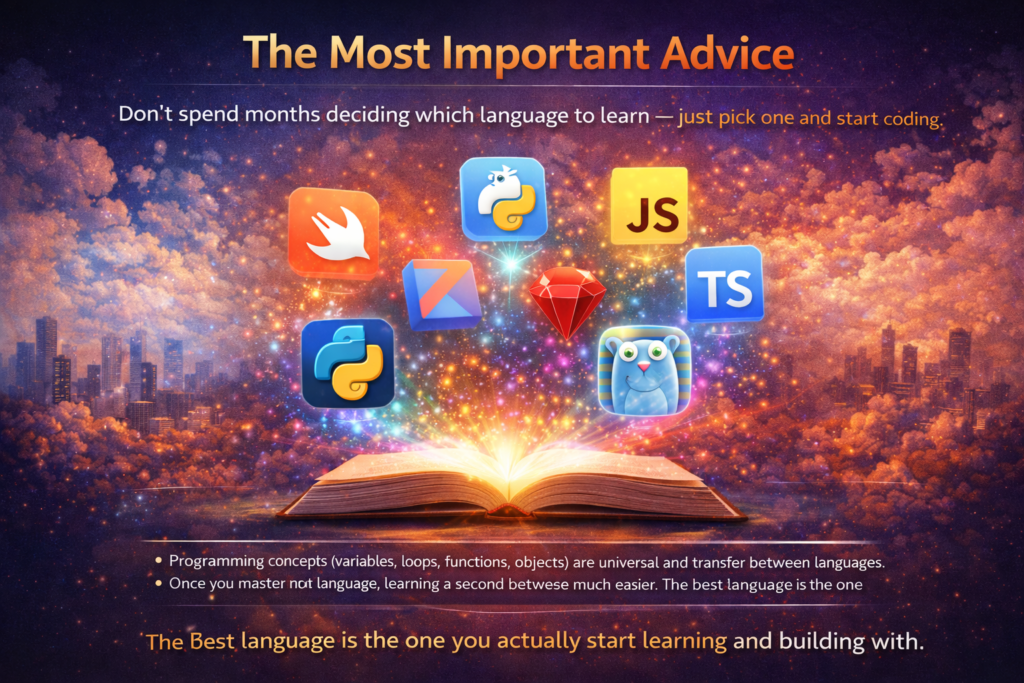
Every language on this list is a solid choice in 2026. Python and JavaScript offer the most versatility and job opportunities, while specialized languages like Go, Rust, and Swift serve specific niches. Choose based on your interests and career goals, start building projects as soon as possible, and never stop learning. The programming landscape evolves, but the fundamentals remain the same.