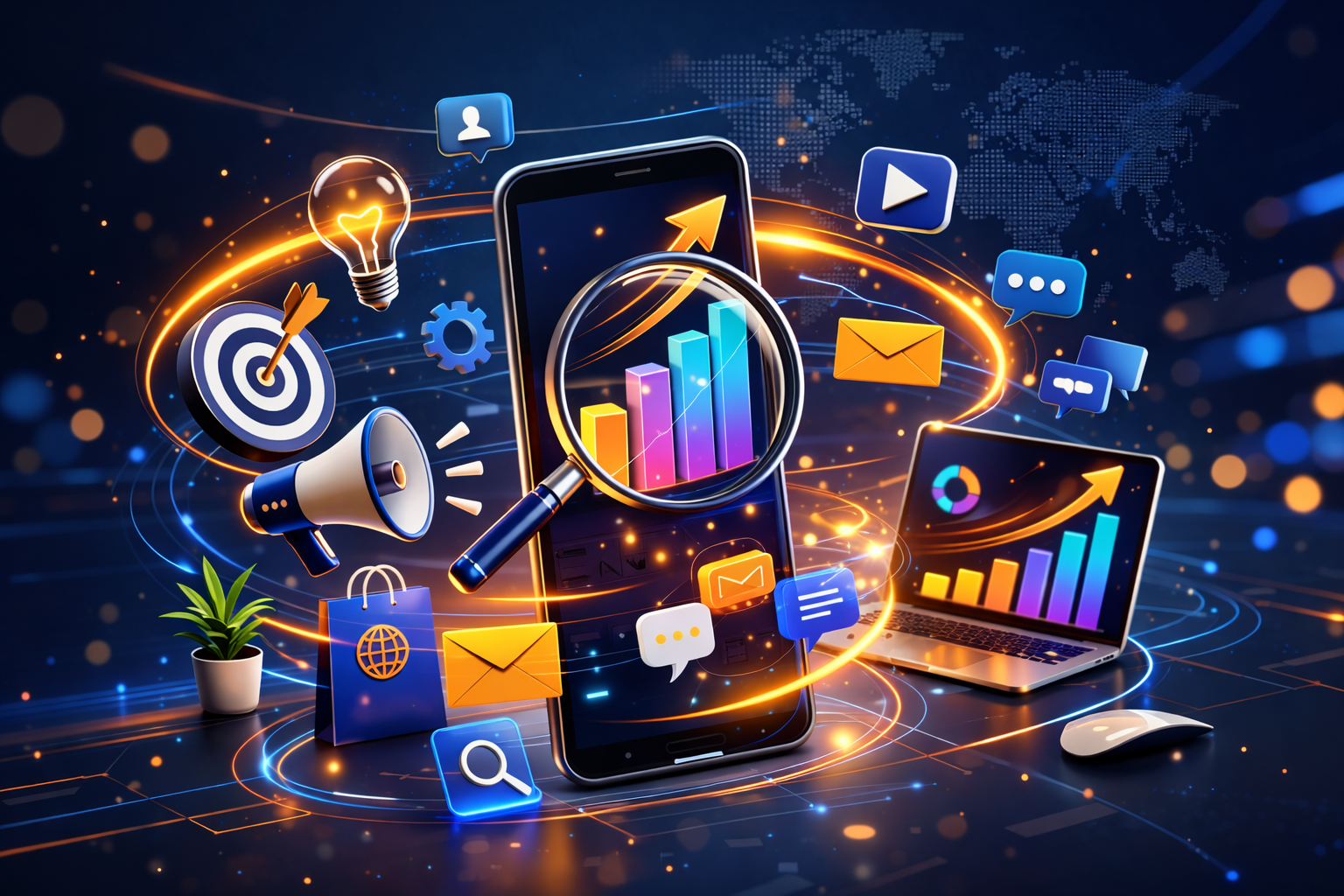
What Exactly is Digital Marketing?
Digital marketing is the practice of promoting products, services, or brands through digital channels such as search engines, social media platforms, email, websites, and mobile apps. Unlike traditional marketing methods like TV ads, billboards, or newspaper advertisements, digital marketing allows businesses to reach a global audience with precision targeting, measurable results, and significantly lower costs.
In 2026, digital marketing has evolved far beyond simple banner ads and email blasts. It now encompasses artificial intelligence-driven campaigns, voice search optimization, immersive augmented reality experiences, and hyper-personalized content strategies. Whether you’re a student, a small business owner, or someone looking to switch careers, understanding digital marketing is no longer optional — it’s essential.
Why is Digital Marketing Important in 2026?
The world has over 5.5 billion internet users as of 2026, and the average person spends nearly 7 hours online each day. This massive shift in consumer behavior means that businesses must meet their customers where they are — online. Here are the key reasons why digital marketing matters more than ever:
- Global Reach: You can reach customers anywhere in the world without geographical limitations. A small business in Jaipur can sell products to customers in New York.
- Cost-Effective: Compared to traditional advertising, digital marketing offers a much higher ROI. You can run effective campaigns with budgets as low as ₹500 per day.
- Measurable Results: Every click, impression, conversion, and sale can be tracked in real-time using analytics tools like Google Analytics 4.
- Targeted Audience: You can target specific demographics, interests, behaviors, and even individual users through remarketing campaigns.
- Level Playing Field: Small businesses can compete with large corporations through smart digital strategies, creative content, and community building.
Core Components of Digital Marketing
SEO (Search Engine Optimization)
Improve your website ranking on Google and drive consistent organic traffic that converts into real leads and customers.
Google Ads (PPC)
Run targeted Google Ads campaigns and generate instant leads that help increase visibility and boost your business growth.
Social Media Marketing
Build your brand presence on social media and engage your audience to create strong connections and grow your business online.
Website Development
Create fast, modern, and responsive websites that attract visitors, improve user experience, and increase conversions effectively.
How Digital Marketing Works .
Imagine you own a small bakery. Here’s how digital marketing can help you grow:
- Website & SEO: You create a website showcasing your cakes, breads, and pastries. You optimize it so when someone searches “best bakery near me,” your site appears at the top.
- Social Media: You post mouth-watering photos and behind-the-scenes videos on Instagram. Your reels of cake decorating go viral.
- Google Ads: You run ads targeting people searching for “birthday cake delivery” in your city.
- Email Marketing: Customers who’ve ordered before get weekly emails about new flavors, special discounts, and festive offers.
- Reviews & Reputation: Happy customers leave positive reviews on Google, which further boosts your visibility.
This integrated approach is what makes digital marketing so powerful — all channels work together to create a seamless customer experience.
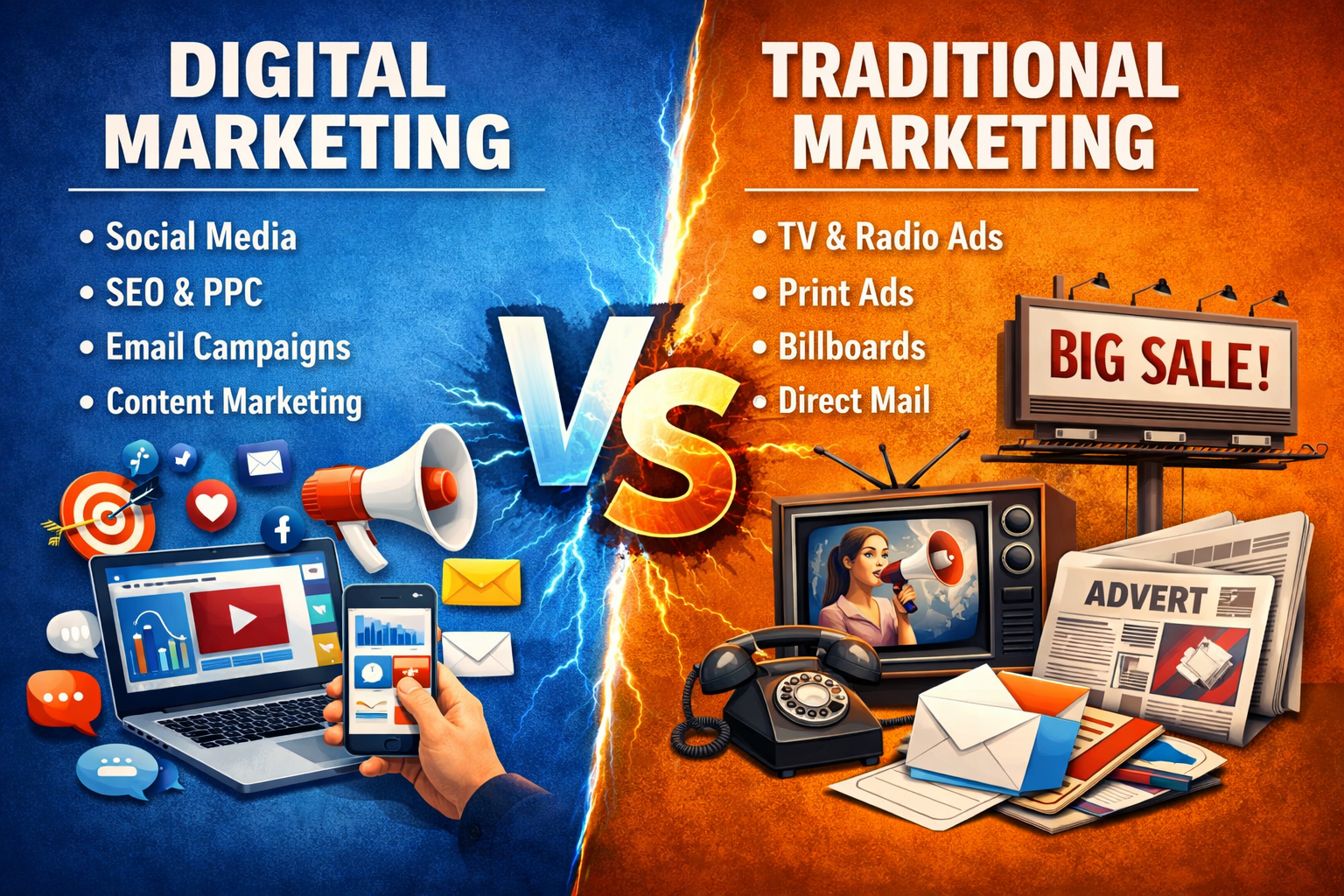
Digital Marketing vs Traditional Marketing
Traditional marketing includes TV commercials, radio ads, print ads (newspapers, magazines), billboards, and direct mail. While these still have their place, digital marketing offers several distinct advantages:
- Cost: A TV commercial can cost lakhs of rupees; a Facebook ad campaign can start from ₹100/day.
- Targeting: A billboard shows to everyone passing by; a digital ad can target 25-35 year old women interested in fitness in Mumbai.
- Measurement: It’s nearly impossible to measure how many people saw your newspaper ad and took action; digital ads provide exact numbers.
- Interaction: Traditional media is one-way; digital marketing enables two-way communication with your audience.
- Speed: It takes weeks to launch a print campaign; a digital campaign can be live in hours.
Getting Started with Digital Marketing in 2026
If you’re a complete beginner, here’s a step-by-step roadmap to start learning digital marketing:
- Learn the Basics: Understand what each channel does and how they work together. Free resources from Google Digital Garage, HubSpot Academy, and YouTube are great starting points.
- Pick a Specialization: While it’s good to understand all channels, specializing in one area (SEO, PPC, social media, content) makes you more valuable.
- Get Hands-On: Start a blog, create social media profiles, run small ad campaigns. Practice is the best teacher.
- Get Certified: Earn certifications from Google, HubSpot, Meta, and Semrush to boost your credibility.
- Build a Portfolio: Document your projects, results, and learnings. This is what employers and clients want to see.
- Stay Updated: Digital marketing changes rapidly. Follow industry blogs, attend webinars, and join communities.
Conclusion
Digital marketing is not just a career option — it’s a fundamental skill for the modern world. Whether you want to grow a business, build a personal brand, or pursue a high-paying career, mastering digital marketing opens doors to endless opportunities. The best time to start was yesterday; the second best time is now. Take the first step, keep learning, and remember that every expert was once a beginner